
Call us 24/7+86 13400658521

OpenAI receives $1.5 billion in new investment from SoftBank, allows employees to sell shares through tender offers

OpenAI is allowing employees to sell about $1.5 billion worth of stock in a new tender offer to SoftBank, CNBC has learned.

The new financing will give the Japanese tech group a bigger slice of the artificial intelligence startup and allow current and former OpenAI employees to cash out their shares, two people familiar with the matter told CNBC.

Employees have until Dec. 24 to decide whether to participate in the new tender offer, which has not been previously reported, one of the people said. The deal was pushed by SoftBank’s billionaire founder and CEO Masayoshi Son, who insisted on a larger stake in the startup after investing $500 million in OpenAI’s last round of funding, one of the people said.

The tender offer is unrelated to OpenAI’s potential plans to restructure the company as a for-profit business, one of the people said.

OpenAI and SoftBank declined to comment.

The deal, which is being made through SoftBank’s Vision 2 fund, highlights Son’s interest in the field of artificial intelligence and backing the most valuable private companies, according to people familiar with the matter. SoftBank is an early investor in semiconductor company Arm, and Son said at a conference in October that he is preparing “tens of billions of dollars” to “take the next big step” in artificial intelligence. He has previously invested in Apple, Qualcomm and Alibaba.

SoftBank’s Vision Fund 2 recently invested in artificial intelligence startups Glean, Perplexity and Poolside. SoftBank has about 470 portfolio companies and $160 billion in assets across its two Vision Funds.

A person close to Son told CNBC that the investment in OpenAI fits SoftBank’s enthusiasm for deploying cash and adopting a capital-intensive business model.

Even without SoftBank’s deep pockets, OpenAI can easily raise billions of dollars in cash. In the two years since launching ChatGPT, its valuation has climbed to $157 billion. OpenAI has raised about $13 billion from Microsoft and completed its latest $6.6 billion round of financing in October, led by Thrive Capital and followed by chipmaker Nvidia, SoftBank and other companies.

The company also received a $4 billion revolving credit line, bringing its total liquidity to more than $10 billion. CNBC confirmed to a person familiar with the matter in September that OpenAI expects revenue of $3.7 billion this year and losses of about $5 billion.

OpenAI employees can cash out

The tender offer will be for current and former employees who received restricted stock units at least two years ago and held them for at least two years, a person familiar with the matter said. The price of $210 per share will be consistent with the company’s most recent round of financing.

Against the backdrop of a sluggish IPO market and soaring company valuations, tender offers are crucial for technology employees. Private companies rely on such transactions to keep employees happy and ease the pressure of going public. Since OpenAI won’t be going public anytime soon and its price is too expensive for potential acquirers, secondary stock sales are the only way for shareholders to get some of their paper wealth in the near future.

Databricks is another private company that raised money to allow employees to cash out and avoid the pressure of the public markets, CNBC reported on Tuesday.

OpenAI has taken a stricter approach to tender offers in the past, with the company setting rules to determine who can participate in stock sales, CNBC reported in June. Current and former OpenAI employees previously told CNBC that concerns about access to liquidity grew after reports that the company had the right to claw back vested shares.

But the company changed its policy on secondary sales of stock in June and now allows current and former employees to participate equally in the annual stock tender offer.

The company expects to allow more of these secondary sales and will need to tap the private markets again in the future depending on investor demand and the capital-intensive nature of its business, according to a person familiar with the new tender offer.

OpenAI faces increasing competition from startups like Anthropic and tech giants like Google. Revenue in the generative AI market is expected to exceed $1 trillion within a decade, according to new data from Menlo Ventures, and corporate spending on generative AI has surged 500% this year.

In October, OpenAI launched a search feature in its popular chatbot ChatGPT, enabling the powerful AI startup to better compete with search engines like Google, Microsoft’s Bing, and Perplexity.

Watch: Geoff Lewis of Bedrock Capital says OpenAI is the definitive consumer brand in AI right now
Related product recommendations:
GFD233A 3BHE022294R0101 3BHE020356R0101
GFD233A 3BHE022294R0101
GFD233A 3BHE022294R0103 
GFD233A103 3BHE022294R0103
GFD563A102 3BHE046836R0102 
3BHE022294R0103 GFD233
 IS220PAICH1B: 10
IS220YDOAS1AJ
IS220PDOAH1A
IS220PDIOH1A
IS220PAOCH1BE
IS220PTCCH1A
IS220PGENH1A
GFD563A102
GFD563A102 3BHE046836R0102
IS220PTCCH1B
IS220PDIAH1A
IS220PPROH1A
IS220PAOCH1A
IS220PDIOH1A
more……

Major chip suppliers gain as U.S. reportedly considers easing restrictions on China

Shares of major global semiconductor equipment companies rose on Thursday following reports that the United States was considering sanctions on China’s chip industry that fell short of earlier proposals.

ASML

was up about 2.9% in afternoon trading in Europe. Tokyo Electron

its shares closed up 6.7% in Japan.

Bloomberg reported on Wednesday that Washington is considering further measures to restrict sales of semiconductor equipment and artificial intelligence memory chips to China, but the new rules may be less stringent than earlier proposals that were seen as more stringent.

The U.S. Commerce Department’s Bureau of Industry declined to comment on the Bloomberg report.

The United States is currently considering reducing the number of suppliers to Chinese tech giant Huawei on its export blacklist of “entity lists.” One key Chinese company that will not be blacklisted is reportedly Changxin Memory Technologies, a storage company and potential competitor to the likes of SK Hynix and Samsung.

ASML had previously expected revenue from China to fall 30% next year, according to Jefferies analysts. Jefferies said on Thursday that excluding the company could mean ASML’s sales in China “will fall less than expected” next year.

ASML is caught in the vortex of the US-China battle for semiconductor technology because of its key position in the chip supply chain.

ASML makes the machines that chipmakers need to make the most advanced semiconductors. These machines have not been exported to China due to various export controls. Recently, the Dutch and US governments have imposed restrictions that make it more difficult for ASML to export some of its less advanced machines to China.

The company sells its machines to “fabs,” or factories that actually make chips, such as TSMC in Taiwan and SMIC in China. Any rules that hit demand or directly target semiconductor manufacturers would have a negative impact on ASML.

The Bloomberg report suggests that further sanctions being considered would target Chinese companies that make semiconductor manufacturing equipment, rather than the factories that actually make chips. This would also be a positive for ASML and other foreign semiconductor equipment companies that sell to fabs.


Related product recommendations:
PPD113B01-10-150000 High-Frequency Control Module
PPD113B03-26-100110 High-Frequency Industrial Control Module
PPD113B01 3BHE023784R1010 – Precision Control Module for Industrial Automatio
IS220PPDAH1A REV E – Advanced I/O Pack, Precision Engineering for Industrial Automation
PPD512A10-150000 Module
TC-PPD011 Battery Extension Module for Industrial Control Systems
3BHE020455R0001 PPD103 B01 Panel Controllers – A Comprehensive Solution for Modern Industrial Automation
PPD113 B01-10-150000 3BHE023784R1023 AC 800PEC Controller
TC-PPD011 51309241-125 Battery Extension Module for PLC Systems
PPD115A102 Controller Module
TC-PPD011 Battery Extension Module for PLC Systems
PPD113B03-26-100110 3BHE023584R2634 – Custom Processing Power Supply Module
PPD113B01-10-150000 3BHE023784R1023 – High-Performance Control Module
IS220PPDAH1A – I/O Pack for GE PLC Systems
TK-PPD011 Battery Extension Module for PLC Systems
3BHE024820R0101 PPD234 A101 Module Card for Industrial Automation Solutio
PCD230 A101 Communication Control Module 3BHE022291R0101, Precision Engineered for Industry 4.0 Solutions
Automation PCD1.M110 Microcontrollers, High-Performance Control Solutions
PCD4.W100: Advanced Analog I/O Module, Designed for Industrial Automation
PCD230 PC D230 A: Precision Control Module, Advanced Industrial Automation
PCD230 3BHE022291R0101: Precision Communication & Control Measurement Board
PCD230 A101 Communications I/O Module, 3BHE022291R0101
GFD563A102 3BHE046836R0102
PCD232A Input/Output Module, 3BHE022293R0101
PCD3.C100 IEC Controller Cyber Secure
PCD232A 3BHE022293R0101 – High-Performance ABB Controller
more……

3500-60 and 3500-61 Temperature Modules Datasheet – 141540

The 3500/60 & 61 modules provide six channels of temperature monitoring and accept both Resistance.Temperature Detector (RTD) and Thermocouple (TC) temperature inputs. The modules condition these inputs and compare them against user-programmable alarm setpoints.The 3500/60 and 3500/61 provide identical functionality except that the 3500/61 provides recorder outputs for each of its six channels while the 3500/60 does not.Bently Nevada 3500/64M 140734-05 Dynamic Pressure Monitor PLC Module

The user programs the modules to perform either RTD or TC temperature measurements using the 3500 Rack Configuration Software. Different I/O modules are available in RTD/TC non-isolated or TC isolated versions. The user can configure the RTD/TC non-isolated version to accept either TC or RTD, or a mixture of TC and RTD inputs. The TC isolated version provides 250 Vdc of channel-to-channel isolation to protect against external interference.

When used in a Triple Modular Redundant (TMR) configuration, temperature monitors must be installed adjacent to each other in groups of three. When used in this configuration, the system employs two types of voting to ensure accurate operation and to avoid single-point failures.

Alarm Setpoints

The user can set Alert and Danger setpoints for the value measured by the monitor using software configuration. Alarms are adjustable from 0 to 100% of full-scale for each measured value. The exception is when the full-scale range exceeds the range of the sensor. In this case, the range of the sensor will limit the setpoint. Accuracy of alarms are to within 0.13% of the desired value. The Temperature Monitors have both under and over alarm setpoints.
Related recommendations:
Bentley Nevada 3500/92  136180-01T
Bentley Nevada 3500/22M
Bently Nevada 3500/25
Bentley Nevada 3500/15
Bently Nevada 3500/34 16
Bently Nevada 3500/64M 140734-05
Bently Nevada 3500/72M 140734-08
Bently Nevada 129133-01  3500/01
Bently Nevada 3500/64M
BENTLY NEVADA 3500/42M-176449-02GB
Bentley Nevada 3500/60
Bently Nevada 3500/40
Bently Nevada 3500/20-01-02-CN
Bently Nevada 3500/61
Bentley Nevada 3500/60 133819-01
Bently Nevada 3500/01-01
more……

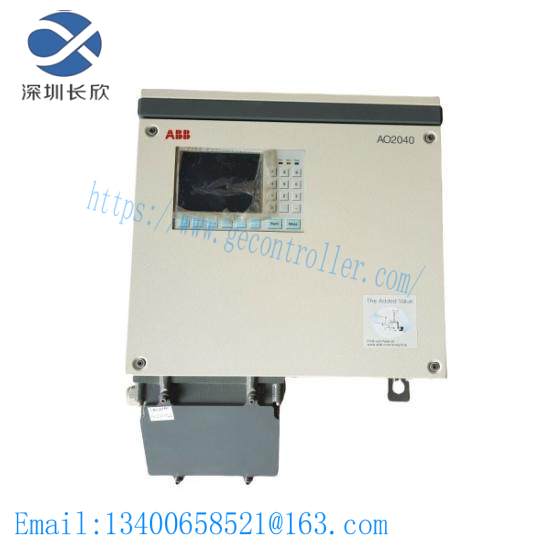
ABB Advance Optima Integrated analyzer system solution

Use in potentially explosive atmospheres in accordance with ATEX and IECEx … Use in ATEX / IECEx Zone 1

Housing purge control flow

The power supply of the gas analyzer is provided via the purging and monitoring unit of the housing purging.

• The power supply to the gas analyzer may only be released from the purging and monitoring unit after the successful initial purge.ABB AO2040 AO2000 Continuous Gas Analyser, ABB

• The purging and monitoring unit monitors the overpressure inside the housing and de-energizes the gas analyzer if the level is below the minimum overpressure (e.g. due to a leakage or purge gas supply failure).

Sequence of the purging and monitoring unit The gas analyzer is powered from the purging and monitoring unit, i.e. the purging and monitoring unit prevents the gas analyzer from being energized before the purge is completed.

The flow sequence of the purging and monitoring unit is as follows:

1. After the start of the sequence, the purge gas flow and overpressure in the monitor are monitored by the purging and monitoring unit.

2. If the minimum flow rate of the purge gas and the overpressure are within the specified limits (see Purge parameters for pressurized enclosure on page 10), the purge timer (initial purge time) can be started;

3. After the initial purge time has elapsed, the power supply is released for the gas analyzer.

4. In the event of an error in one of the sequence steps, the controller must be set up to be reset to the beginning.

This sequence is presented in Figure 4.

Each state of the system is defined in response to the inputs of the monitor. The states are unique. Transitions between the states are only allowed along the paths defined by the arrows and towards the arrows.

The logical conditions for each state are defined by the following boolean logical expressions:

Use in potentially explosive atmospheres in accordance with ATEX and IECEx Use in ATEX / IECEx Zone 2

Introduction

This part of the Operating Instruction contains information of installation, operation and maintenance of the analyzer, ATEX Zone 2 version.

A Non-hazardous area B Hazardous area (ATEX IECEx Zone 2)

1 Power supply TRACO POWER TEX120, either in ATEX Zone 2 or outside the hazardous area

2 Power supply Pepperl+Fuchs PSC2.PS.GR.18.36.17.D-Y0168136, either n

ATEX /IECEx Zone 2 or outside the hazardous area

3 Transmitter unit

4 Connection box

5 Cable glands

6 Purge gas connections

7 Receiver unit

The analyzer consists of three separate modules:

• Transmitter unit with purge fittings and connection box with terminals for the connection of mains and signal cables as well as optional inputs.

• Receiver unit with purge fittings.

• Power supply unit (either TRACO POWER TEX120 or Pepperl+Fuchs PSC2.PS.GR.18.36.17.D-Y0168136)

Standards and directives

All gas analyzer models comply with the regulations of the

European Directive 2014/34/EU (ATEX Directive) / IECEx

scheme, and they are manufactured in accordance with the

following standards:

• EN/IEC 60079-0

• EN/IEC 60079-15

• EN/IEC 60079-28

• EN/IEC 60079-31

The gas analyzer must be designed, installed and operated in accordance with the following standards and directives:

• EN/IEC 60079-14

• EN/IEC 60079-17

• EN/IEC 60079-19

Note

The full designation of the applied standards, including the date of issue, is included in the declaration of conformity supplied with the device.
Related recommendations:
SKKH330/18E
VICKERS 9VB29RS20CM11
Power Supply QUINT-PS/1AC/24DC/20
Rorze RD-323MS
Reliance Electric UVZ3037 – VZ3000
Linmot S01-72/600
Pepperl+Fuchs HIC2025
HUTTINGER PFG5000
P+F KCD2-STC-EX1
BOSCH VM300
WOODWARD EASYGEN-1000
PHOENIX QUINT-PS
KEPCO BOP-20-20M
Fuji 2MBI300N-060 
RADISYS ERNI 9609
more……

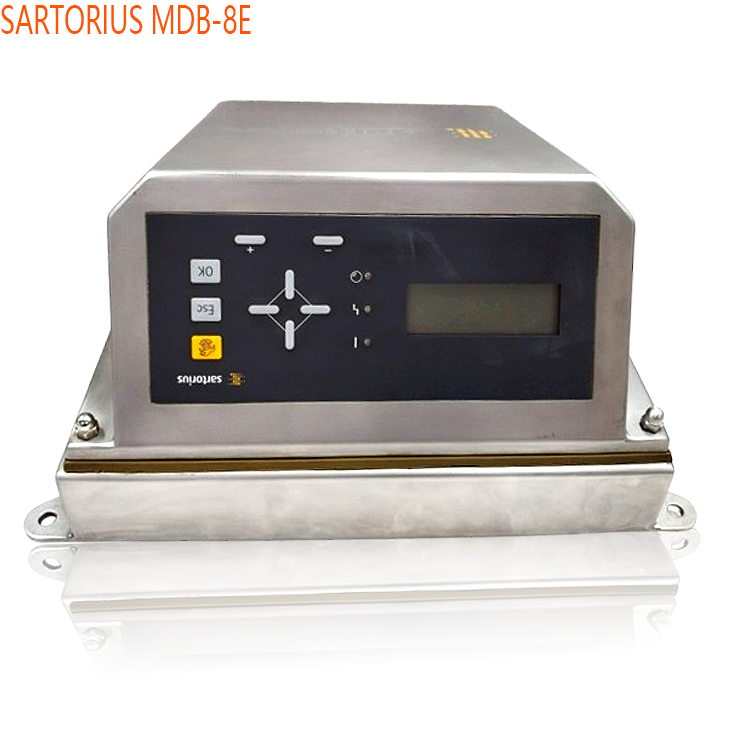
SARTORIUS MDB-8E metal detector

Guaranteed safe – Quality control and equipment protection for your benefit – simple, economical, dependable

Sartorius metal detectors serve diverse branches of industry: chemicals, plastics, recycling, rubber, wood, textiles, nonmetallic minerals, power generation, mining, tobacco, clay and foods.

Evaluation electronics

Premium model: Electronic evaluator, MDB-8E

Multi-channel technology

Microprocess-oriented

Flexible phase adjustment

Menu-driven operation

Continuous self-test 40 product-type memory

locations 100% traceable documentation

Advanced internal function control

Standard model: MDB-5E

Extra-economical single-channel unit

Microprocessorized

Manual phase adjustment

Extremely simple function-key operation

Internal function control

While the food industry gives maximum priority to consumer protection, most other branches of industry attach more importance to protecting their expensive production equipment from damage and their personnel from injury. Like our very successful DISCOVERY, DISCOVERY PLUS and the new OBSERVER series, the alternatives dealt with here provide equipment protection to the satisfaction of our “habitually” high standards.

MDB-C|MDB-R

This MDB-C|MDB-R search coil in a fall-shaft assembly with diverter-valve ejector protects grinding mills, kneaders, rollers and extruders. Its typical areas of application include the plastics, chemicals and food industries.

MDB-C

An MDB-C search coil with conveying belt enables maximum accuracy of detection, even for large clear heights. It protects processing equipment in the chemicals, textiles and chipboard sectors.

MDB-R

These made-to-measure MDB-R round gates for merchantable bowls and logs in the timber industry are also used in pneumatic conveying systems serving the textile industry

MDB-D

MDB-D search coils offer all the advantages of dependable detection coupled with ease of installation, thanks to a split detector requiring no dismantling of the belt to install it.

MDB-US|MDB-UB

The underbelt coil MDB-US| MDB-UB, with its particular ease of installation and good detection sensitivity, guarantees an optimal value-formoney ratio.

MDB-D

An MDB-D search coil protects downstream mills and crushers from the dreaded risk of damage in the recycling, plastic, chemical, tobacco, clay and wood industries.

MDB-DL|MDB-DH

Our huge MDB-DL and MDB-DH search coils are designed for use in open-pit mines, power plants, mining and the timber industry, where they protect excavators, grinding mills, chippers and crushers
Related recommendations:
CB1086DPA0000
METSO IOP303
SEMIKRON SKKH330
3RG4143-6AD00
MSXB048-02-E2
A413511-02 – 2
ALFA LAVA 3183062451
FANUC A16B-1000-0220
AAP3798102-00031
9VB29RS20CM11
TECHNOLOGY 10338-53100
CVX-1243-MC2
ECOSTEP 100-AJ-000-000
M-AIR2
1070080680
more……

Search for products

Back to Top
Product has been added to your cart